


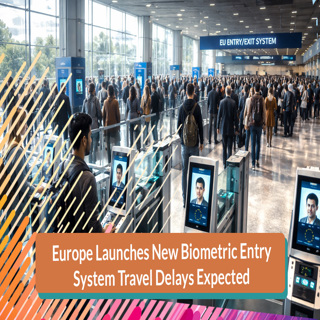
New EU Entry/Exit System (EES) introduces biometric checks for travellers, causing delays and impacting visa processing for Pakistani travellers.
Europe Introduces Biometric Entry System in 2026 What Travellers Must Know
In a major shift for global travel, the European Union has officially launched its Entry/Exit System (EES) in April 2026. This new system replaces traditional passport stamping with advanced biometric verification, including fingerprint scans and facial recognition.
The system is now being implemented across major Schengen Area airports and border crossings, directly impacting travellers from Pakistan and around the world.
What is the Entry/Exit System (EES)?
The EES is a digital border management system designed to:
- Record entry and exit data of non-EU travellers
- Replace manual passport stamping
- Improve border security and reduce illegal overstays
- Automate traveller identification using biometrics
Under this system, every traveller entering Europe must:
- Provide fingerprints
- Undergo facial recognition scans
- Have their travel data digitally recorded
Why Travel Delays Are Expected
While the system improves security, it is currently causing significant delays at European airports.
Key reasons include:
- First-time biometric registration takes longer
- Increased verification checks at immigration
- Technical adjustments during early implementation
- High travel volume during peak seasons
Travellers may experience:
- Longer queues at immigration
- Delayed connecting flights
- Extended airport processing times
Impact on Pakistani Travellers
For travellers applying through a travel agency in Pakistan, this update is critical.
If you are planning to visit Europe:
- Your Schengen visa process may require additional documentation
- You must allow extra time at arrival airports
- First-time travellers to Europe will face longer biometric processing
This makes it essential to plan your trip carefully and work with professional visa consultants to avoid last-minute issues.
How to Prepare for Europe Travel in 2026
To avoid delays and travel stress, follow these expert tips:
1. Apply for Your Visa Early
Due to increased processing checks, apply at least 4–6 weeks in advance.
2. Arrive Early at Airports
Reach the airport at least 3–4 hours before departure for international flights.
3. Keep Documents Ready
Carry all travel documents, including:
- Passport
- Visa approval
- Hotel bookings
- Return tickets
4. Be Ready for Biometric Scans
Expect fingerprint and facial recognition checks at entry points.
5. Consult a Professional Travel Agency
Working with experts ensures smooth visa approval and updated travel guidance.
Why This Update Matters for the Travel Industry
The introduction of EES marks a major transformation in international travel. While it enhances security, it also creates new challenges for travellers, especially those unfamiliar with biometric systems.
For travel agencies and visa consultants, this is an opportunity to:
- Educate clients
- Provide updated visa assistance
- Offer reliable travel planning services
Frequently Asked Questions (FAQs)❓
Q1: What is Europe’s biometric entry system (EES)?
It is a new digital system that records travellers’ biometric data instead of stamping passports.
Q2: When did the system start?
The system officially launched in April 2026.
Q3: Will it affect Schengen visa processing?
Yes, travellers may experience longer processing times and stricter checks.
Q4: Why are there travel delays?
Delays are due to biometric registration and increased security checks at borders.
Q5: How can I avoid delays?
Apply early, arrive at the airport early, and ensure all documents are complete.
-
 31-Mar-2026
New Direct Flights Launched Between Tashkent and Lahore Boost Travel Opportunities in 2026
-
 08-Aug-2025
Flights Resume at United Airlines Following Technical Issue That Left Travelers Stranded
-
 16-Oct-2025
Umrah Pilgrims Can Get Rawdah Permits from NUSK Office Near Gate 365
-
01-Jun-2026
Fly Jinnah Expands Domestic Route Network with Double-Daily Lahore-Islamabad Flights
-
 15-Nov-2024
Sustainable Tourism in Venice: Strategies to Combat Over-tourism and Preserve Cultural Heritage
-
 23-Sep-2025
PIA Cancels 20 Flights, Stranding Passengers in Pakistan, UAE, Oman & UK

